
the wonder Dawg Logo

The Wonder Dawg

Creator Helm

Music Quest

"No matter what the game, if you don't know the rules, the game will play YOU."

Disclaimer: This school is based on real-world experience, not legal theory. We are not attorneys. Any legal decisions you make should be consulted with a qualified attorney in your state of residence.

1. Learn who the Players are

1.Understand Each Player
Full Industry and what they do. (Pre-Release)

1. Who is Who?

Let's start with a basic perspective:

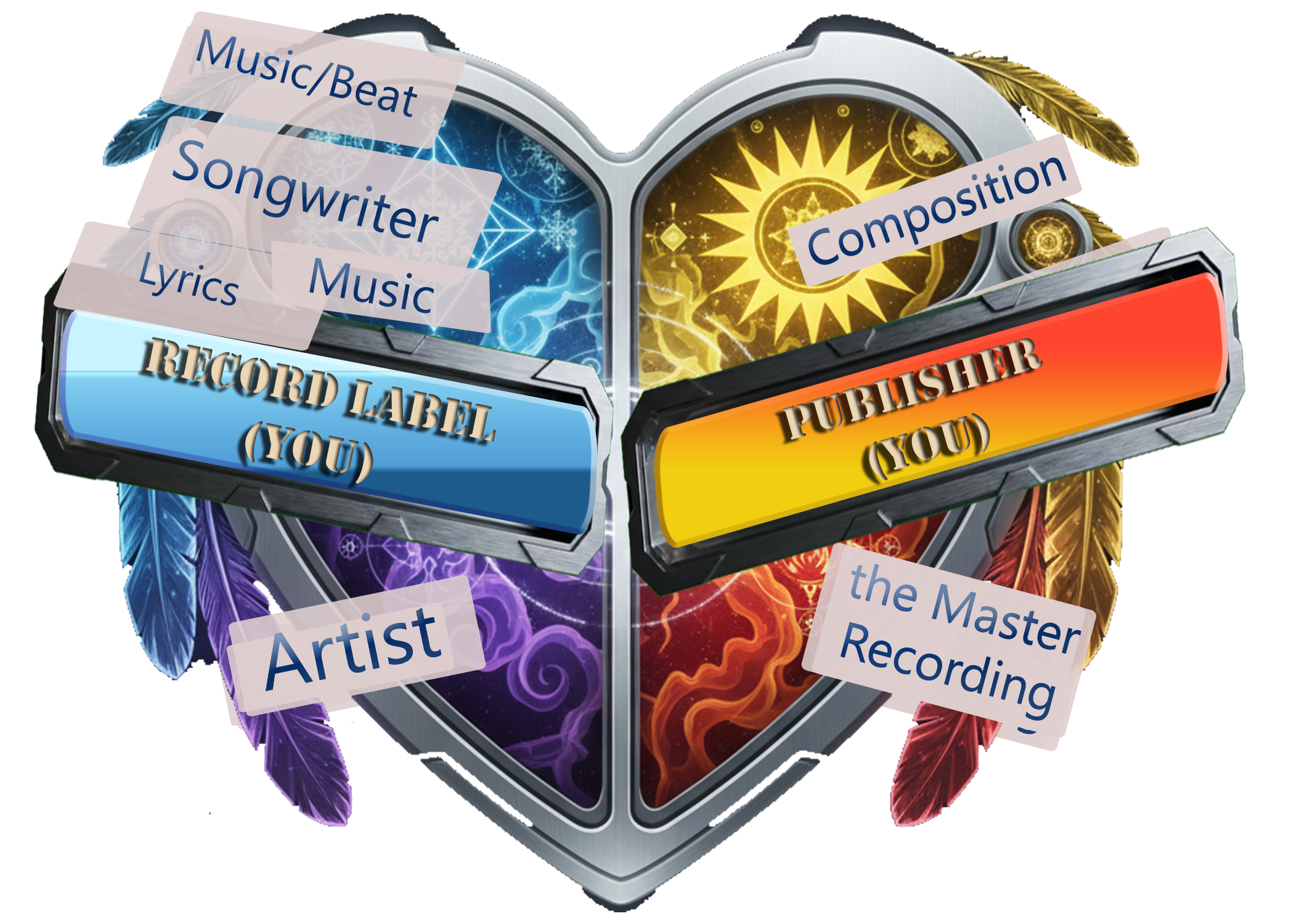
A Songwriter songwriter is hired
by an Artist artist
to make the beat, lyrics and song structure. composition In royalty terms, each of these things is a Composition

Yes, the Wav file itself is one of the royalties we collect.

These 4 layers START to show the complete picture.

Full Industry

Who are the Labels and Publishers?

1. What is a Record Label?

I used to think of record labels as these giant, mythical palaces where only "big shots" got to hang out. I thought you had to be discovered by some all-powerful music executive to even get an invite.

What I didn't get is that a record label isn't necessarily a building—

it's the business framework of the industry.

-

In simple terms, a record label is the business entity that handles all the stuff artists hate: distributing the music, protecting the copyrights for the sound recordings, collecting the royalties for those recordings, and managing the metadata.

Aren't you doing that anyway?

2. What is a Publisher?

A music publisher is often times also the record label.

Think of a publisher as a sort of middle man or promoter for the song

They manage and protect the copyright of the song and are responsible for collecting all the royalties associated with the composition.

Aren't you doing THAT also?

Practical Explanation
A Songwriter named Marco Berrios songwriter is hired
by an Artist named the wonder Dawg artist
to make the beat, lyrics and song structure for hire. composition Super Funky Tron, Marco Berrios's Label Owns the Composition
The Collection Agencies
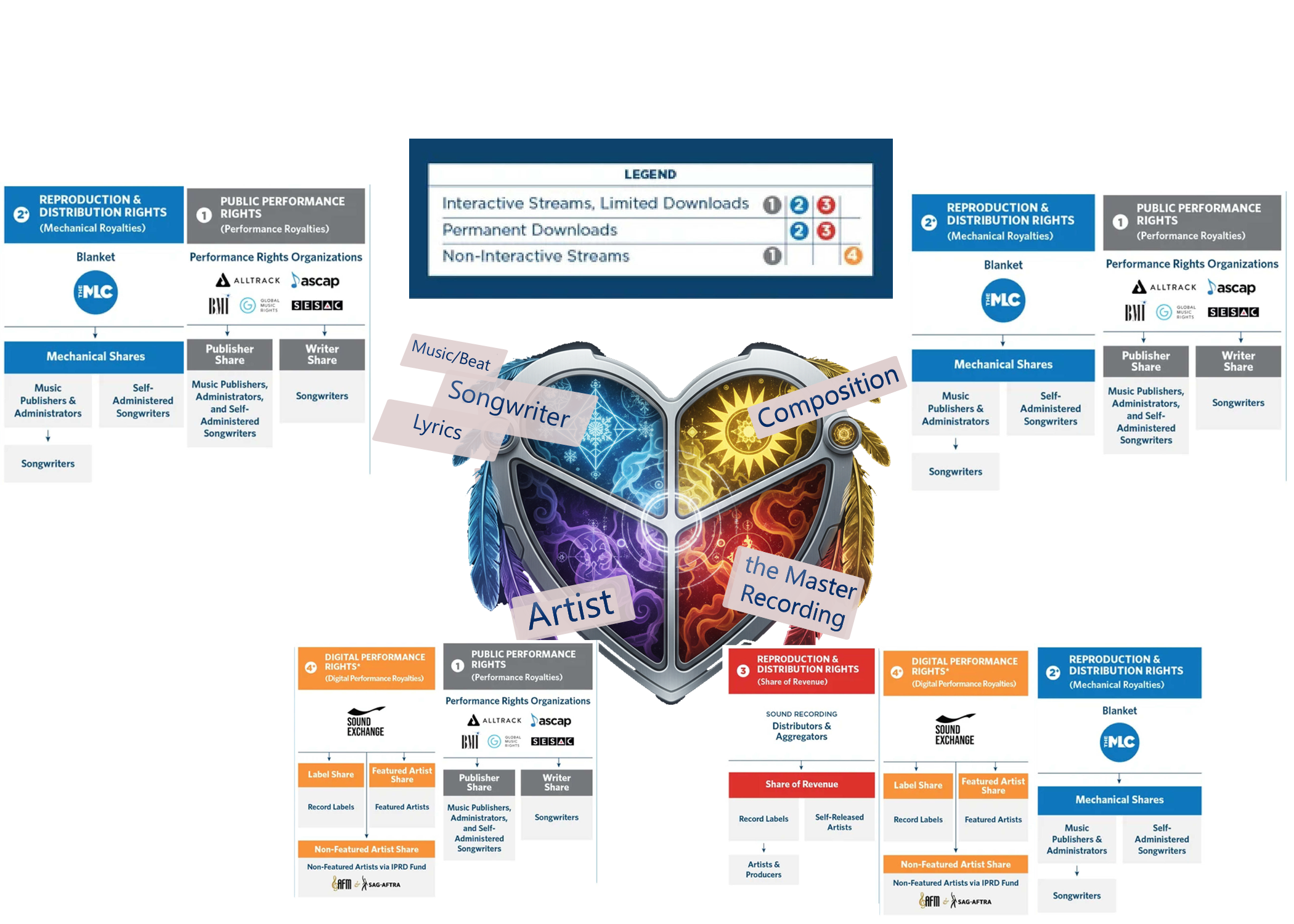
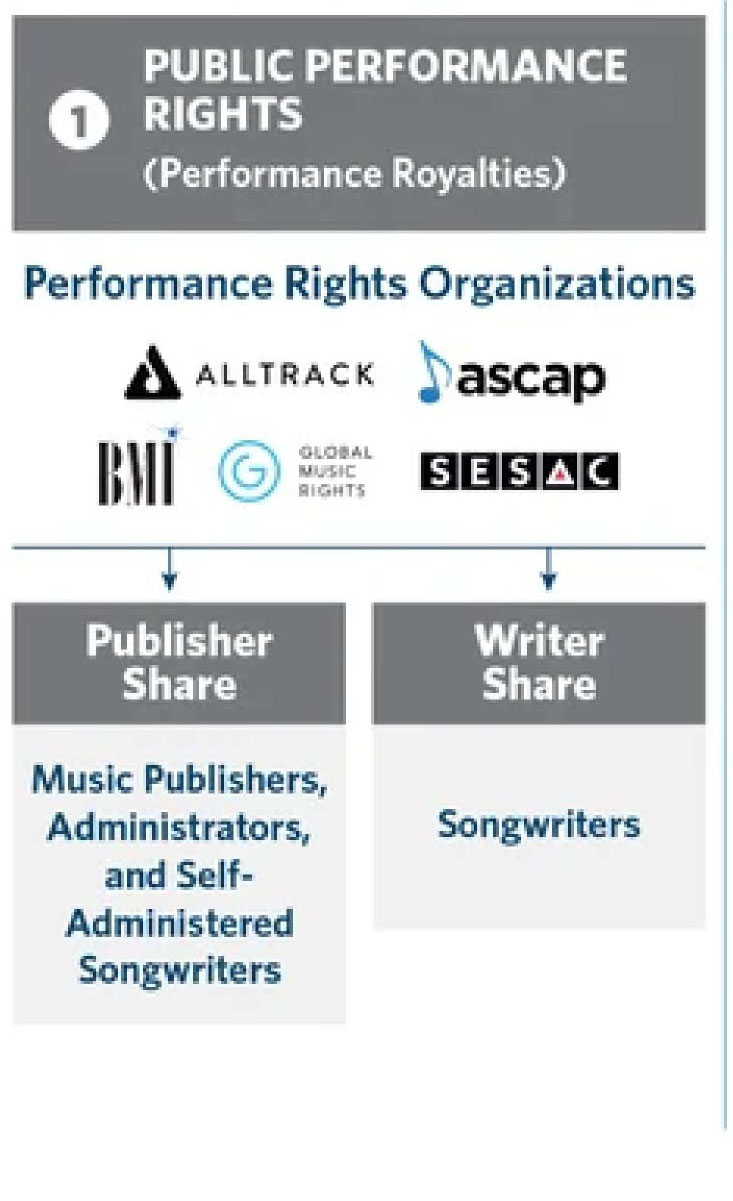
  • Who: PROS (ASCAP, BMI, SESAC, etc.)
  • PRO Royalty Flow
  • What they do: Collect Public Performance Royalties
  • for Artists. AND Publishers
  • Where from: Any "public broadcast." This includes actual Radio/TV, bars, live venues, and non-interactive "radio-style" streaming (like Pandora).
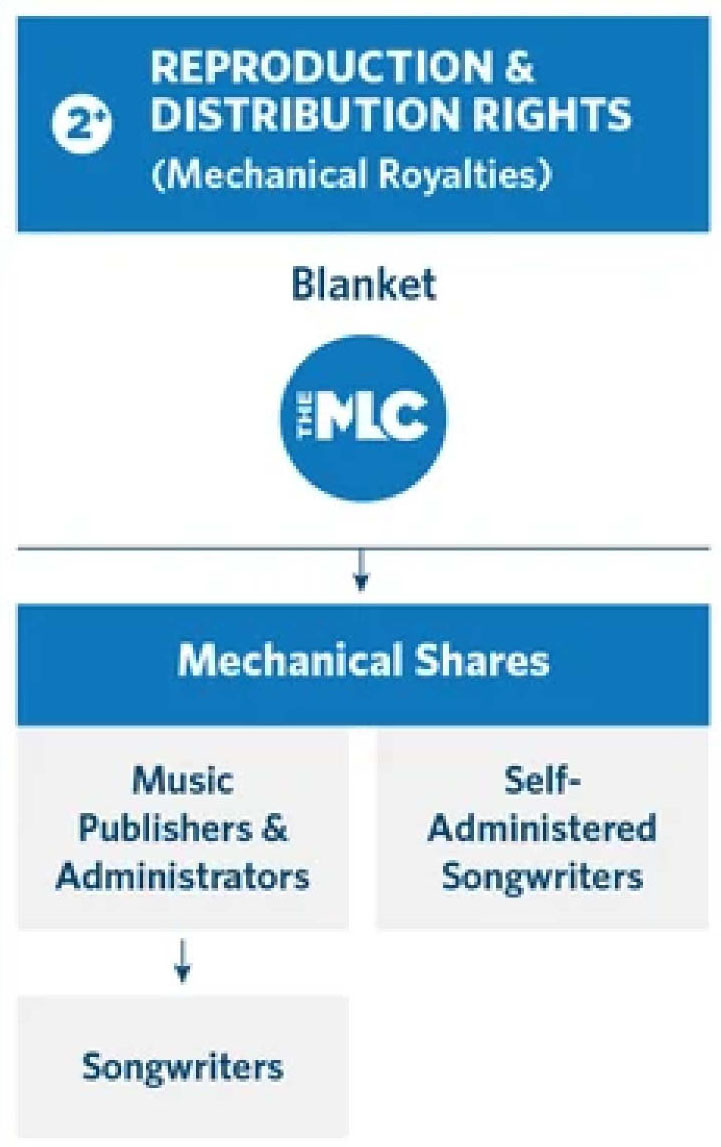
  • Who: The MLC (Mechanical Licensing Collective)
  • Mechanical Royalty Flow
  • What they do: Collect Mechanical royalties. This is an old word for a "copy" of a song. Historically, this meant the physical pressing of a CD or vinyl record. In the digital age, the law has been updated: In the digital world, an "on-demand" stream is considered a "copy."
  • Where from: Interactive "on-demand" streaming (Pandora Premium, Apple Music) and all digital downloads (like from iTunes or a DTC sale on AmpWall).
  • Who they pay:

    Split: 50/50 between SongWriter & Publisher.

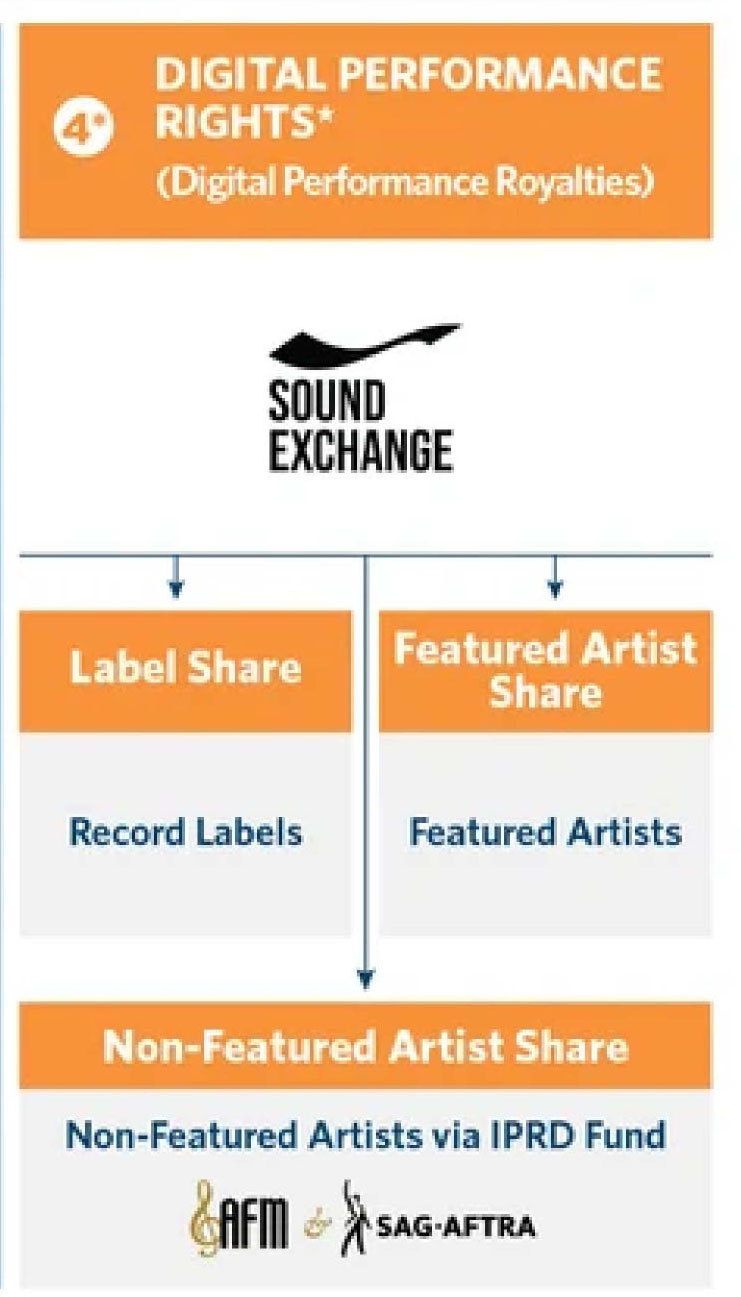
  • Who: SoundExchange
  • Digital Public Performance Royalty Flow
  • What they do: Collect Digital Public Performance royalties for the master recording.
  • Where from: Non-interactive "radio-style" digital streaming (Pandora, SiriusXM).
  • Who they pay: They split this money between the Label (50%) , the main Artist (45%) , and session musicians (5%).
artist
3. Tying It All Together Label vs Publisher

The Most Important Secret in the Music Industry:

The industry wants you to think you are only an "Artist" or "Songwriter." They do this so you'll sign a contract with a "Label" or a "Publisher" who will "help" you.

This is the redirect.

You, the independent creator, are BOTH the Publisher AND the Label. The "thieves" of the industry are almost always "publishing companies" (often run by a "trusted friend") who offer "help" in exchange for you signing over your "Publisher's share" of the Composition. This is the single most valuable asset a creator has, and they trick you into giving it away.

Never give up your Publisher's share. If you remember nothing else, remember this.

2. Learn the Codes (Pre-Release)

The barcodes that connect your copyrights to your bank account.

Purpose: Establish the necessary entities to protect your work, track your music, and begin the process of collecting all types of royalties.

Completely tagged songs

Should include all of the following:

  • Track Title
  • Artist Name
  • Written By (Name + IPI)
  • Published By (Name + IPI)
  • ISWC (Composition)
  • ISRC (Recording)
  • ISNI (Artist)
  • UPC (Release)
  • Discogs Release ID
  • SoundExchange Performer ID
  • SoundExchange Rights Owner ID
  • Genre
  • Release Date
  • P-Line (℗ Sound Recording Owner)
  • C-Line (© Composition Owner)
  • Copyright Notice ("All Rights Reserved")
  • Album Art (Embedded)

Now we're going to learn about all of these codes

IPI (Interested Party Information)

(Example IPI: 01021806014)

  • What it is: The ID number that identifies you.
  • You get this number when you sign up with a PRO (like ASCAP or BMI).
  • It is essential to register as a Performer AND a publisher. The result is TWO IPI numbers.
  • (Example: Written By: Marco Antonio Berrios (IPI: 01021806014)
  • Published By: Super Funky Publishing (IPI: 1209716164)
  • Simple Analogy: It's the "Bank Account Number" that tells royalty collectors (like PROs and The MLC) who to pay.

Purpose: Protect your Songwriter and Publisher rights.

Action: Register yourself as a Songwriter AND Publisher with a PRO like ASCAP.

Result: 2 Separate IPI numbers, 1 for the songwriter and 1 for the Publisher.

ISWC (International Standard Musical Work Code)

(Example: T-9319275871)

  • What it is: The "Master ID" for EACH Composition (©).
  • Simple Analogy: It's the Social Security Number for your song. You only have one Social Security number but you can have multiple bank account numbers attached to the Social Security number. For our purposes, the ISWC is the root and the ISRC is the branch produced by that root.

Purpose: Formally register your composition to get its unique ID.

Action: Log into your PRO (ASCAP/BMI). Register the song with title, songwriter, publisher, and splits.

Result: A unique ISWC (International Standard Musical Work Code).

ISRC (International Standard Recording Code):

(Exemple: TCAFJ2179674)

  • What it is: The ID for a specific Master Recording (℗) attached to the ISWC.
  • Simple Analogy: It's the Serial Number for a specific product.
  • Each version of every song gets a new ISRC.
  • Key Detail: This is how you can have one ISWC (one song) linked to many ISRCs. The original track, the instrumental, the a-capella, and the remix would all have their own unique ISRC, but they all point back to the same ISWC because they are all versions of the same core composition.
ISNI (International Standard Name Identifier)

(Example: 0000000527794530)

  • Purpose: A unique, persistent, and globally recognized identification number for public identities.
  • Action: Unlike others, ISNI does NOT issue numbers directly. You MUST go through registration agencies like Sound Credit.
  • Result: A 16-digit "digital passport" number.
UPC (Universal Product Code)

(Example: 196871234567)

  • Purpose: A unique sales code For EACH RELEASE.
  • Detail: Albums get one UPC. Every track on the album use the same UPC, even if the same ISWC and ISRC were previously used in a different release
  • Action: Generate your own UPCs for free to stay in control of your music.
  • Result: A UPC number for revery release.
  • PLEASE note the UPC and the ISRC is primarly what the MLC uses to track Mechanical license usage.
Discogs Code

(Example: [r34385869] )

  • Purpose: A unique, album identifier for every release in the musical archives.
  • Action: Register each release on Discogs before releasing in order to tag the file before uploading..
  • Result: A unique "Discogs number" for each release.
More Codes
  • SoundExchange Performer ID: (Example: SX110268JE - ID for the wonder Dawg)
  • SoundExchange Rights Owner ID: (Example: SX110268JG - ID for Super Funky Tron
  • "P Number": (Ex "℗ 2025: Super Funky Tron". This indicates the copyright holder of the sound recording)
  • "C Number" (Ex "© 2025: Marco Antonio Berrios" This indicates the copyright holder of the musical composition)
  • PLEASE note the UPC and the ISRC is primarly what the MLC uses to track Mechanical license usage.
If you found any value to this information

Please consider downloading some of my music now.

3. Learn the Markets

3. Learning and Choosing Your Business Structure

Your business structure is the legal shield that separates your creative career from your personal life.

First, a secret: to be a record label, you don't need a building or a team of executives. You simply need to declare yourself a record label and establish legal framework.

Let's look at the two most common options.

Option 1: Sole Proprietorship/DBA (The Simple Start)

Think of a sole proprietorship as the most basic business structure there is. The business is simply an extension of you. "DBA" means "Doing Business As"

  • The Action: You don't have to do anything to be a sole proprietor at all. You are automatically a sole proprietor. You may need to file a "doing-business-as" (DBA) certificate if you use a business name other than your own legal name, like Super Funky Tron with the State you live in.
  • The Why: The biggest benefit is simplicity. There are no startup costs. All your business income and expenses are reported on your personal tax return, which can make tax season easier.
  • The Caveat: The major drawback is unlimited personal liability. There is no legal separation between you and your business. If your business is sued or goes into debt, your personal assets are at risk.
Option 2: LLC - Limited Liability Company (The Professional Shield)

An LLC is a separate legal entity from you, the owner. It's a more formal structure that provides a crucial layer of protection.

  • The Action: To form an LLC, you must file official paperwork (usually called Articles of Organization) with your state. After that, you need to get a separate business bank account and an Employer Identification Number (EIN) from the IRS. You must keep your personal and business finances completely separate.
  • The Why: The biggest benefit is limited liability protection. If your business is sued or racks up debt, your personal assets are protected. This is a game-changer. It also gives you more credibility in the industry and a clearer way to manage your business expenses.
  • The Caveat: It costs money to set up an LLC (fees vary by state), and there are often continuous taxes and fees. In many states, once you start the LLC, you are legally bound to continue paying taxes or be forced to shut down. Please research your state and options.
My Decision: Start Where You Are

For me, the choice was clear, but not by preference. The limited liability protection of an LLC was always the goal, but to be honest, I was broke and couldn't afford the fees. The only realistic choice I had was to start as a sole proprietorship.

I want to remind you that while this is NOT LEGAL ADVICE, I found it as a perfectly valid way to begin. Knowing your options is the first step.

Tab 3: Wallets & Paths

I. The Two Paths

Objective: Understand the two main highways for your music—Private vs. Public—and why we focus on the empowered path first.

In music, there are two main paths to get your music to the world. They are built on one simple concept: owning vs. renting.

1. The Private Performance Path (The "DTC" Path)

What it is: The "Owning" model is the Direct-to-Consumer route. This path focuses on selling a copy of your music on www.Ampwall.com or similar websites (as digital downloads or physical goods) directly to your fans.

The Concept: The fan can use this for their own Private Performance (listening at home, in their headphones, etc.). This includes vinyls, CDs and Downloaded WAV files.

Analogy: This is like buying a pair of shoes. Your fan owns them. They can wear them whenever they want, in private. You get paid directly and fairly for your product.

2. The Public Performance Path (The "Distributor" Path)

What it is: This "Renting Model" is the traditional route of using a distributor to get your music onto public platforms like Pandora, Apple Music, YouTube Music, etc.

The Concept: The Public Platforms rents out copies of the file you uploaded to the distributor. These platforms are all forms of Public Performance. Listeners pay for temporary access.

Analogy: This is like renting shoes at a bowling alley. You pay for access, and the owner (the alley) gets paid for the public use. The owner of the bowling alley is then supposed to pay a royalty to the shoe manufacturer.

A Quick Note on Transparency

Even on this simple "Owning" path, there is one rule that good business follows. Because a "sale" is a legal "copy" of the composition, a Mechanical Royalty is owed to the Publisher. In a truly transparent model (like CreatorHelm/AmpWall), the storefront handles this by reporting the sale to The MLC, who then pays that royalty to... you, the Publisher.

II. The "Renting" Path Deep Dive (The Four Wallets)

When you "rent" your music on streaming platforms, the money gets split into four different "wallets".

Wallet 1: The "Radio" Wallet (Your PRO)

Who: PROs (ASCAP, BMI, SESAC).

What: Public Performance royalties (Radio/TV/Venues).

Split: 50/50 between Songwriter & Publisher.

Wallet 2: The "On-Demand" Wallet (The MLC)

Who: The MLC.

What: Mechanical royalties (Interactive streams/downloads).

Split: 100% to the Publisher.

Wallet 3: The "On-Demand" Wallet (Your Distributor)

Who Pays: Your Distributor (DistroKid, CarToon Core, etc.)

Key Detail: The Aggregator Trap

To get on platforms like Spoti-lie, artists are forced to use one of these distributors. But the secret the industry hides is that most of these "competing" distributors aren't competitors at all. They are just different front-doors that all lead to the same few back-end aggregators. The market is dominated by a few giants like:

1. The Orchard (Owned by Sony Music Entertainment)
  • Subsidiaries: AWAL, Red Essential, IODA, Iris Distribution, Blind Dive Records, Sandbag, AutoKratz.
  • Partnerships: Metal Blade, Pure Noise, Sarm Music, Cooking Vinyl, Fat Possum, Thirty Tigers.
2. Believe (Owners of TuneCore)
  • Subsidiaries: TuneCore, Groove Attack, Nuclear Blast, Naïve, AllPoints, Sentric Music Group, Canvasback, Play Two, Jo&Co, Morning Glory Music.
3. Ingrooves (Owned by Universal)
  • Integration: Part of Virgin Music Group.
  • Acquisitions: Sovereign, Fontana Distribution.
  • Partnerships: Dirty Hit, Roc Nation, Hyperdub, Text Records.

While there are rare exceptions, this means that whether you pick Distributor A, B or C, your money is often passing through another middleman (the aggregator) who takes a cut before you ever see a penny.

Wallet 4: The "Digital Radio" Wallet

Who: SoundExchange.

What: Digital Public Performance royalties (Pandora/SiriusXM).

Split: Label (50%), Artist (45%), Musicians (5%).

Your Quest is Complete.

If you found any value to this information, PLEASE download songs from the shop.

Go To Shop